

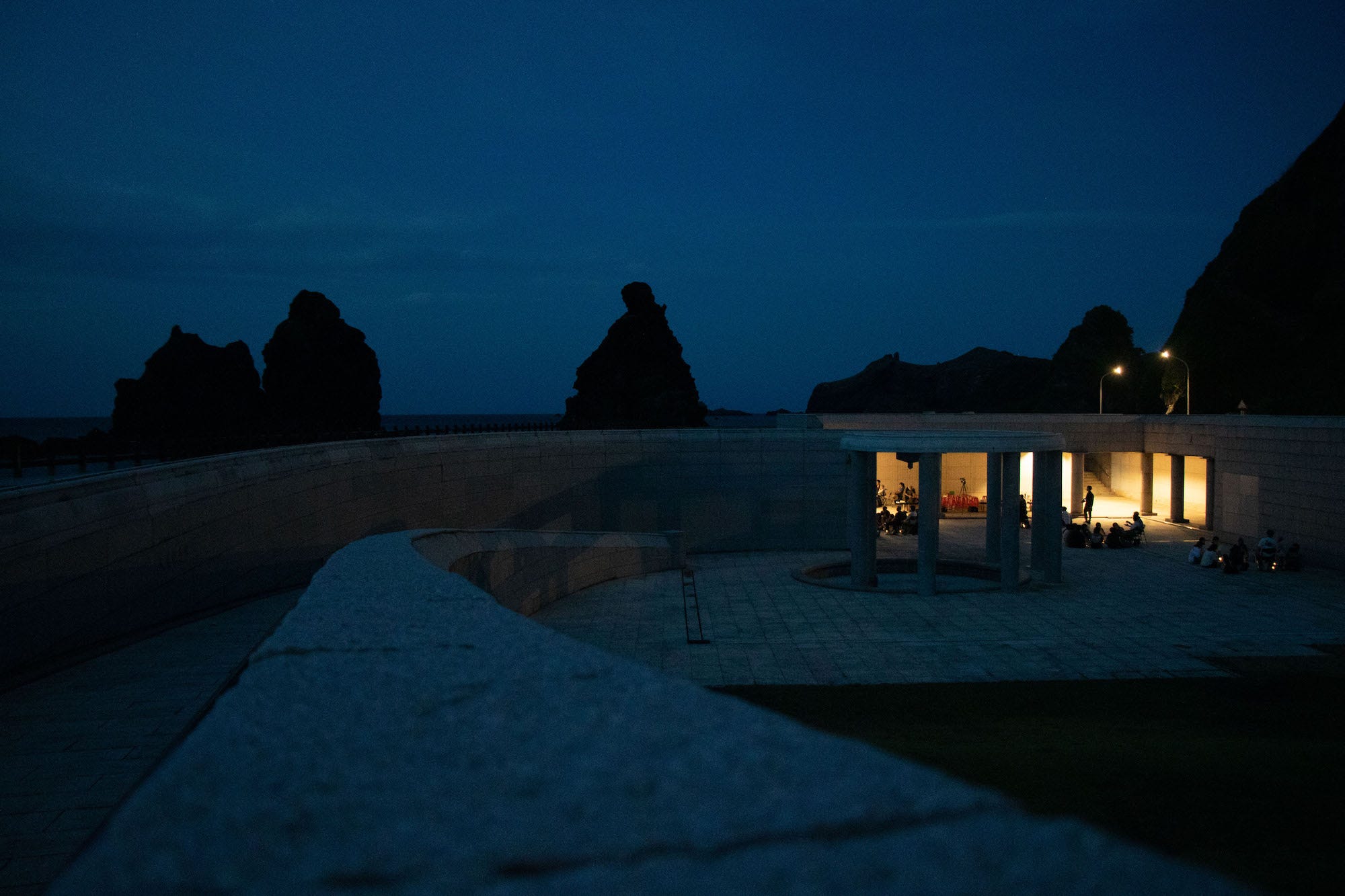
My alarm went off at 5:30 a.m.
I hit snooze.
Nine minutes later, it rang again.
Snooze again.
At 5:50, I was finally upright in bed, squinting into my phone as I called 張則周前輩 (Elder Zhang Ze Zhou). His phone, he’d told me, was an older model and didn’t have an alarm, so every morning at camp I called to wake him.
He answered on the second ring. “Good morning!” he said with an enthusiasm I didn’t think was possible before eight. “If I’m not down by the van at 6:15, just come to my room. I’m already dressed—I just might fall asleep again.”
A half hour later, after fetching him from his room, we pulled up to 綠洲山莊 (Oasis Villa), whose name belied its history. We walked into the courtyard, where the red words 守法守紀 (obey the law, observe discipline) still clung to the concrete walls. About two dozen young people greeted us, but none matched the energy of the man I’d just called out of bed.
I was at 人權之路-青年體驗營 (the Road to Human Rights Youth Camp) on Green Island, a lush volcanic island off Taiwan’s southeastern coast that was once home to one of the White Terror’s most notorious prisons. Each summer for the past 19 years, the 陳文成博士紀念基金會 (Chen Wen-Chen Memorial Foundation), has been gathering former political prisoners, along with leading scholars and transitional justice advocates, to pass on the history they had survived.
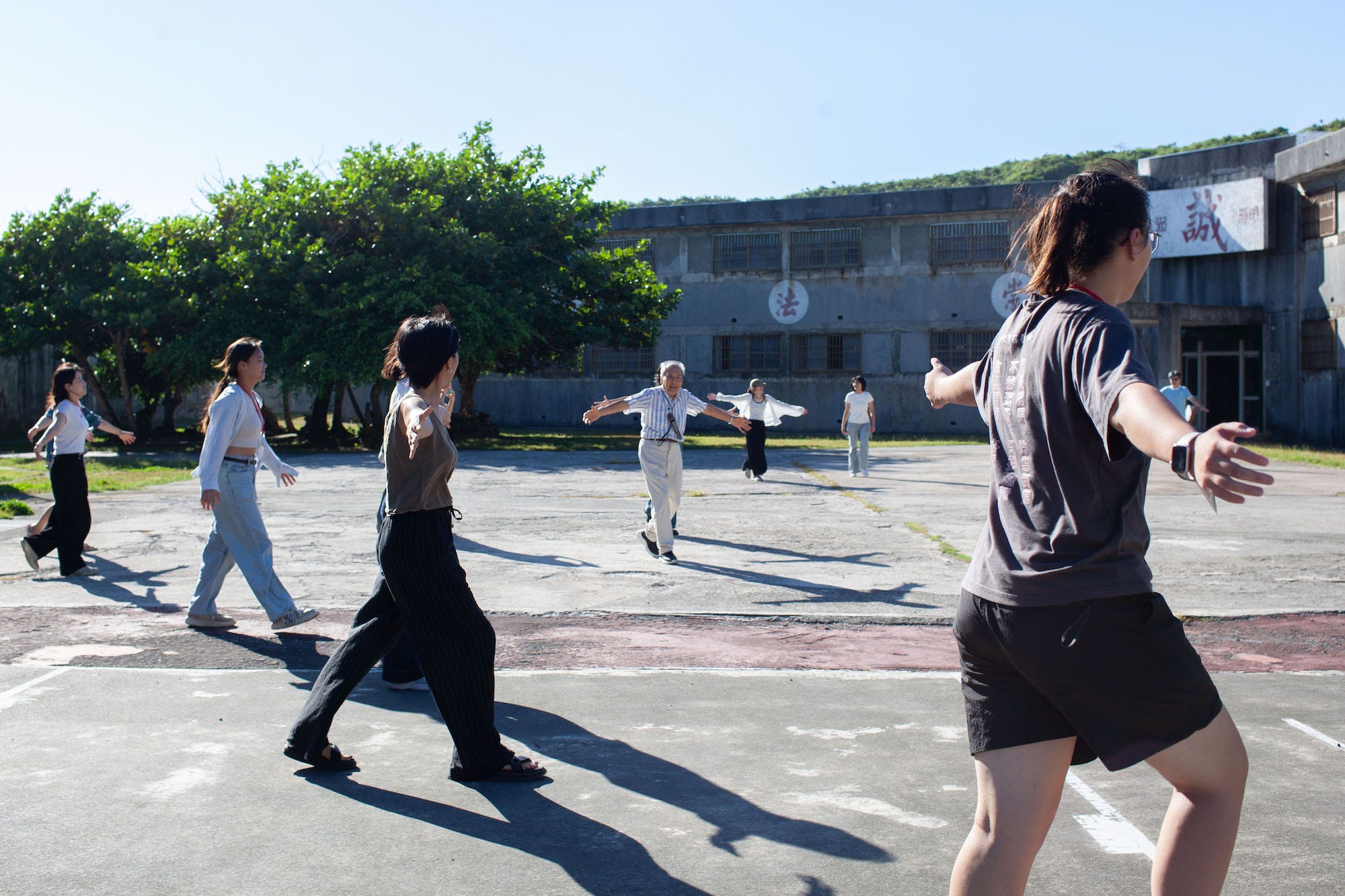
Every morning, Elder Ze Zhou led us through a series of movements and breathing exercises. (See precious video footage here.) A healthy body, he insisted, was what had sustained him through everything. “You never know what life might throw at you,” he would tell us, “so you have to prepare yourself, stay healthy. It’s like vaccination—if you have your health, you can withstand whatever may come.” At 98, he made the argument simply by being himself.
As we got into formation, Elder Ze Zhou mentioned that he had been up since three to plan today’s routine. Yesterday, he grinned, he’d kept getting sidetracked by stories. But on the camp’s final day, he was determined to make the most of our time, and to pass on the practices he believed mattered most. Every few minutes, he’d pull a small, carefully folded slip of paper from his shirt pocket, glance at it, nod to himself, and carry on.
Together, we breathed into our 丹田 (dāntián), the Daoist center of vitality deep in the lower belly. We shook out our limbs and stretched toward the sky that was just brightening over the island. Through it all, we were accompanied by a steady stream of commentary that somehow blended Taoist metaphysics and contemporary geopolitics.
A shoulder roll became a teaching on community. Breath opened to ecology. A movement to draw diagonal arcs through the air became a meditation on weaving past, present, and future.
“Look down at the ground beneath your feet. Know the land you’re standing on. We have to be rooted. Don’t always be looking up—Trump is always looking up, and look at the mess we’re in.”
As our time was coming to an end, Elder Ze Zhou asked us to sink into a wide stance, one foot in front, knees bent, and arms extended outward. He then instructed us to turn to each other, and to sweep our arms back towards our centers in order to take in each other’s 精華 (jīnghuá)—our essence, the best of one another.
I turned to my left, and found myself facing the recent high school grad from Dajia who, the night before, had handed me her notebook and asked if I might read the poems she’d written during camp. As I drew my arms toward my chest, an image from her poem returned to me: generations walking over Green Island’s cooled lava, thinking it had always been a road.
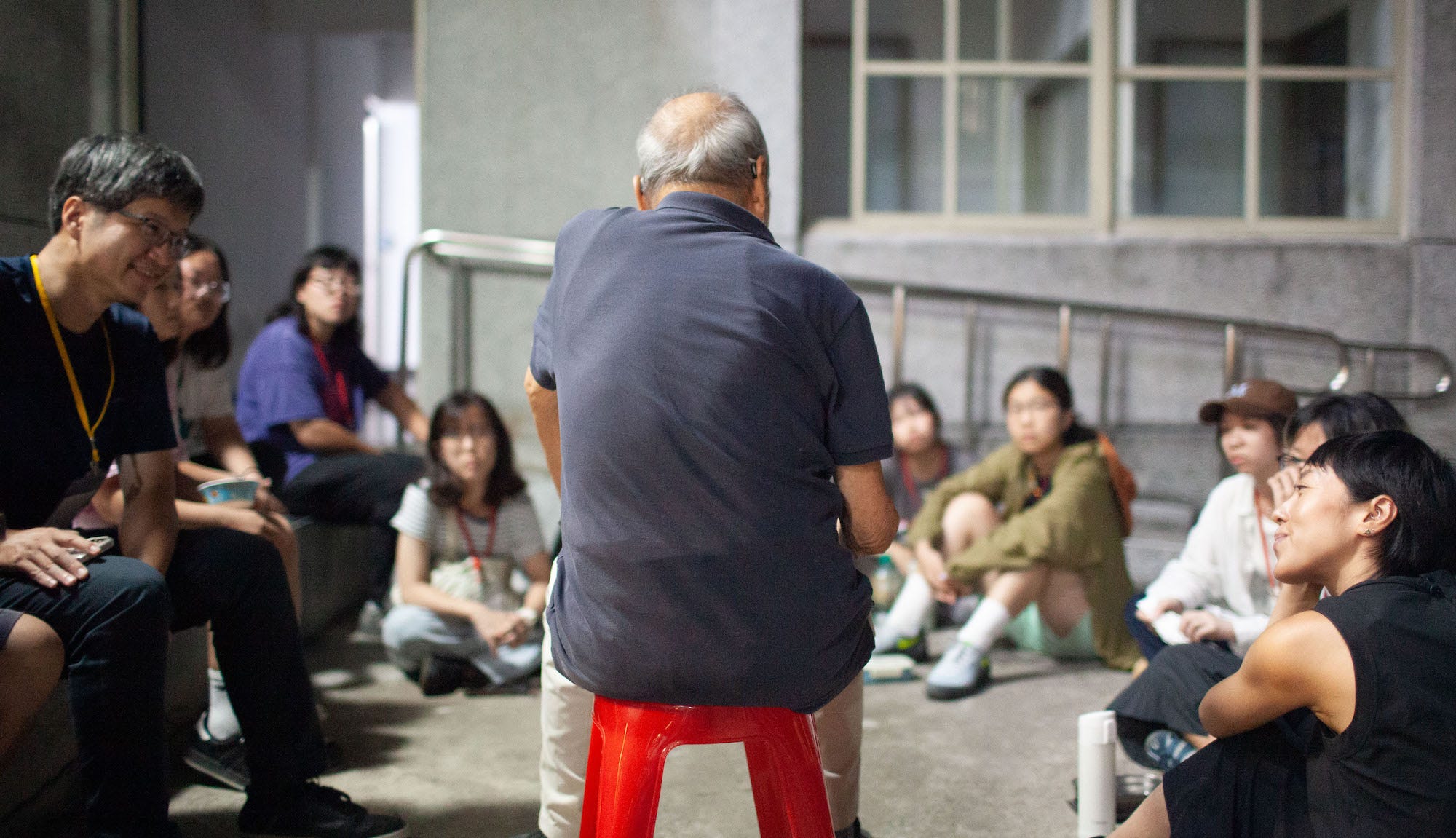
In 1948, Zhang Ze Zhou, then a student at China’s National Defense Medical College, moved from Shanghai to Taipei after hearing from friends that Taiwan offered the kind of intellectual freedom and education he longed for. He was hungry to learn.
Within a year, after being defeated in the Chinese Civil War and relocating to Taiwan, the Kuomintang imposed martial law. Soon after, Ze Zhou was arrested for attending a practical psychology seminar that authorities later deemed subversive. He spent the next 11 years imprisoned in detention facilities across Taiwan, including on Green Island.
After his release, Ze Zhou had to study for and sit the university entrance exams again alongside teenagers. While looking for a cram school, a family friend’s daughter offered to help; she would later become his wife. At 38, he finally earned his bachelor’s from National Taiwan University (NTU), the same school where his education had been interrupted. Yet the label 政治犯 (political offender) continued to haunt him. He was denied permission to pursue graduate study in America and remained under state surveillance for decades.
Ze Zhou eventually earned a PhD and became a professor at NTU. For many, that might have been the pinnacle of a career—NTU is Taiwan’s most prestigious university. Yet he believed high-quality education should be accessible to everyone, not just those admitted to elite schools. And so he went on to help pioneer Taiwan’s community college movement, devoting decades of his life to civic education.
Nearly eight decades after arriving in Taiwan, Elder Ze Zhou now stood in the courtyard where he had once been forced to memorize Sun Yat-sen thought: “We like to talk about being a free democracy. But democracy doesn’t continue by itself,” he told us, slowly pushing his palms out into the morning air. “We have to struggle for it. For there is no democracy without justice.”
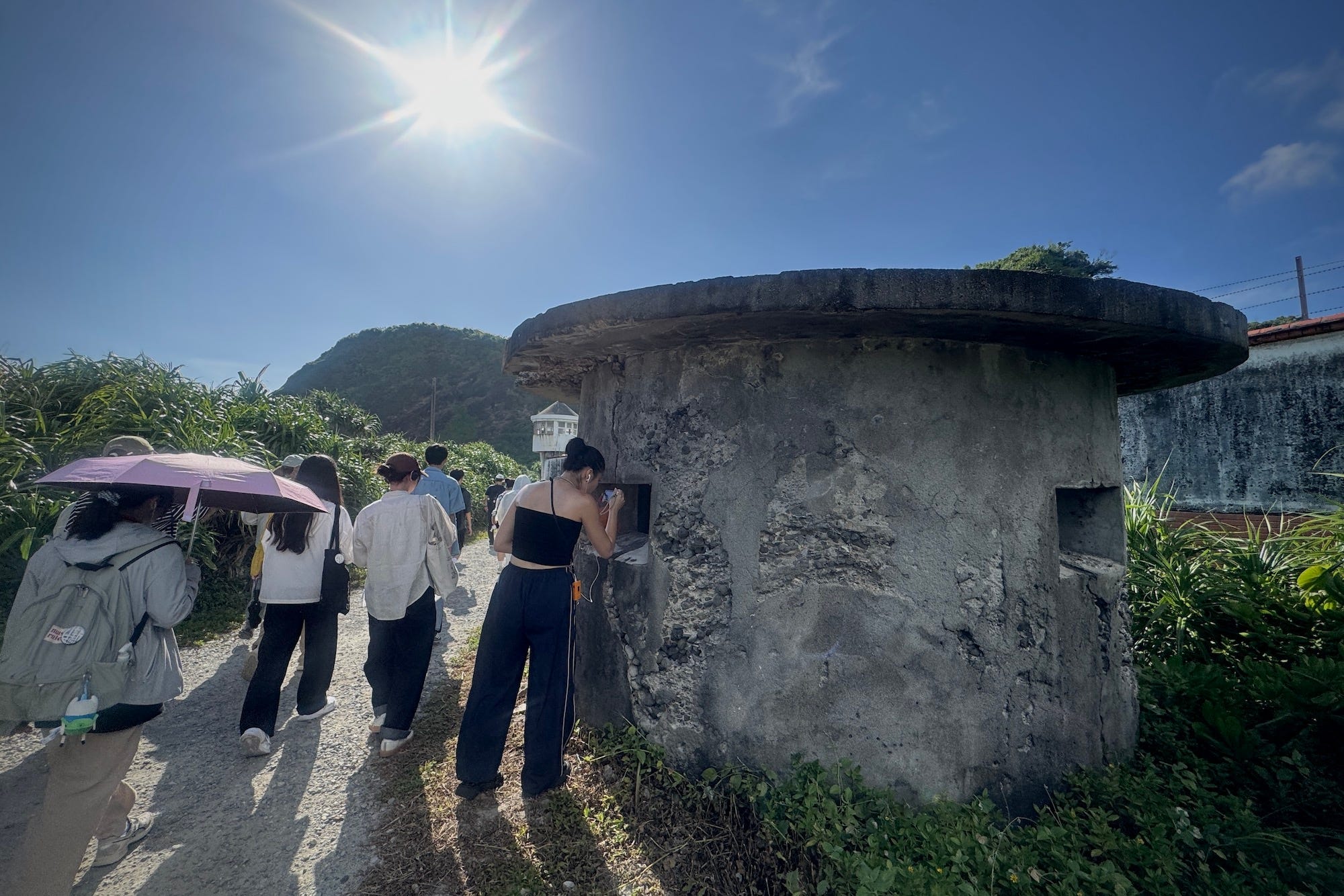
The July sun bore down on us as we made our way along the seaside path. It wasn’t even eight and already my shirt was soaked through with sweat. Even the sea breeze felt hot, as if God had aimed a giant cosmic hairdryer at the island.
We stopped beside a concrete pillbox, a former military bunker that the prison had repurposed as a punishment cell. Here, prisoners were left to endure the scorching sun by day and the bitter cold at night. At high tide, seawater flooded the floor. Insects crawled over their bodies. Some prisoners were confined there for as long as six months.
It was one of many stops that morning, as the elders led us across the island, retracing the years that should have been the prime of their youth. We walked to the cemetery, where the men who had suffered and the men who had guarded them now shared the same hillside. We offered a song to the spirits. Then, each of us took a white rose and spread out across the cemetery, laying it at a different grave.
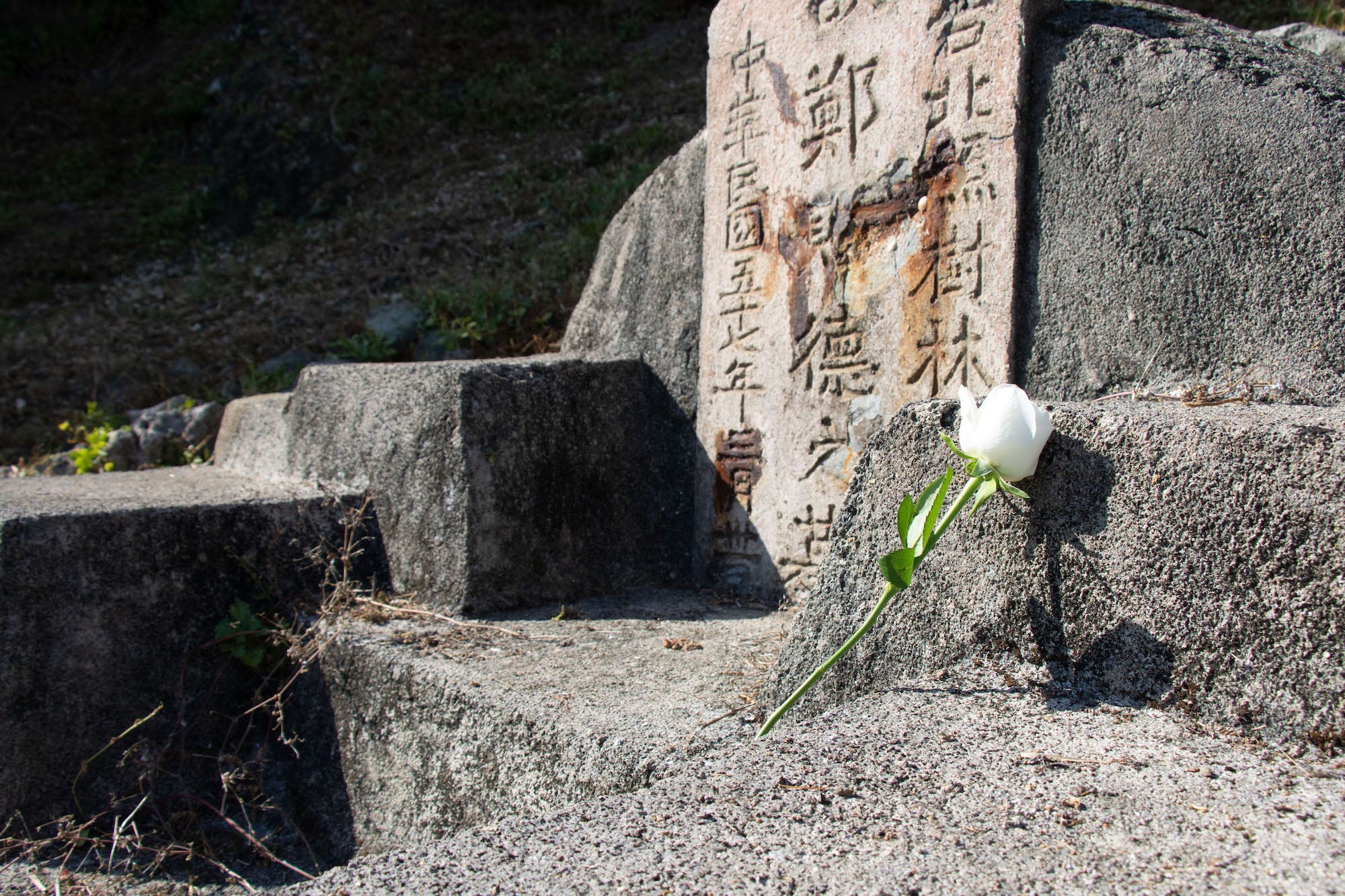
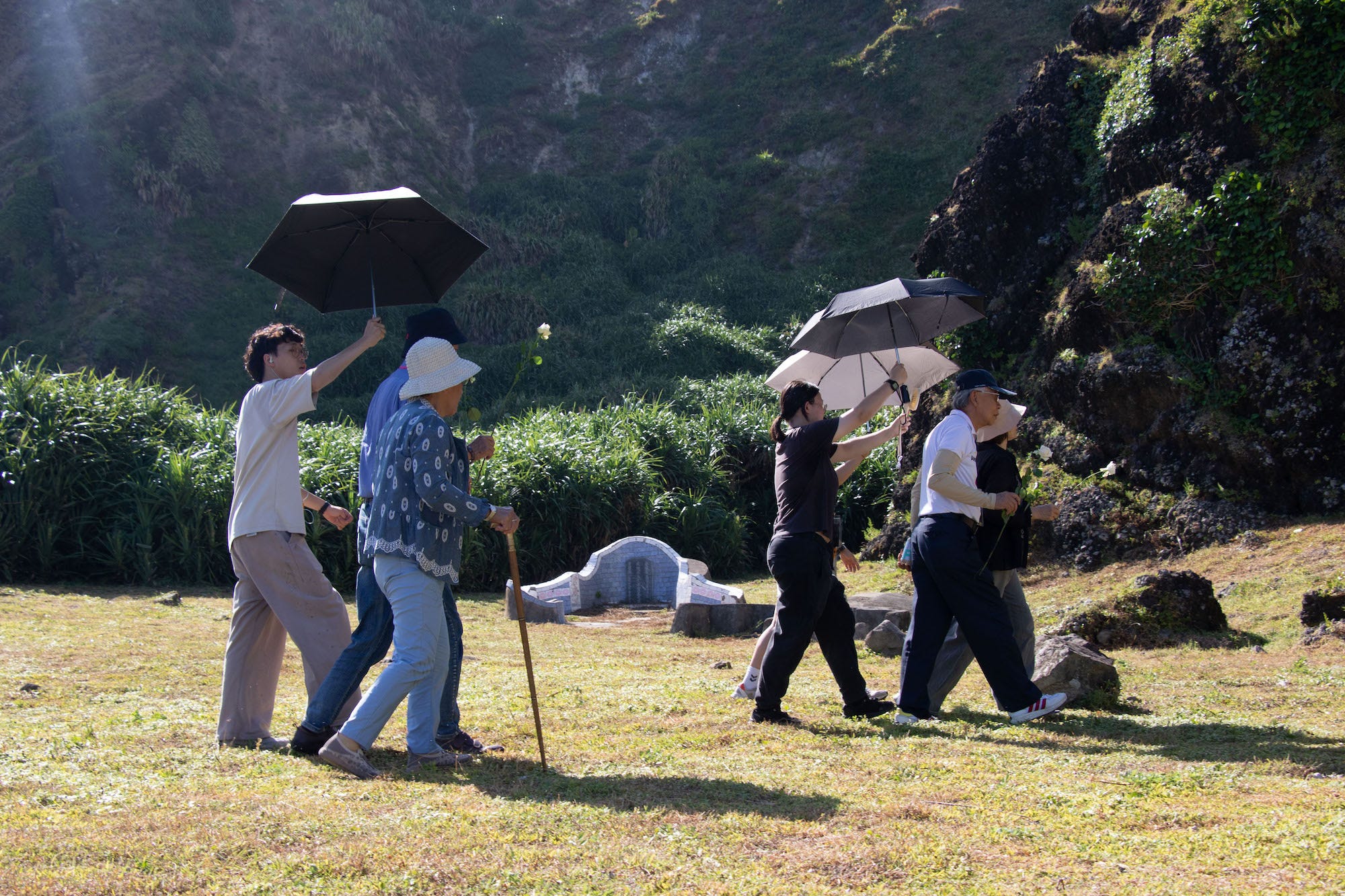
Throughout it all, four young organizers hovered around the elders, their own faces shining with sweat as they angled umbrellas against the sun, held mini electric fans on full blast, and fanned them with paper ones.
We passed a weathered concrete arch bearing the words 新生之家 (”New Life House”), marking the entrance to the former New Life Correction Center. The elders recalled another cruelty unique to Green Island: at the Center, prisoners could hear the ocean and smell its salt, but they could not see it.

I looked out at the glittering open sea and tried to imagine living within earshot of the sea, but never being able to glimpse it. What must it have been like to wake up each day to the sound of something so vast, so alive?
Did it become a cruel, constant reminder of what lay just beyond reach?
Or did some find comfort in the Pacific’s ceaseless returning?
Or perhaps, after enough years, a person simply stops listening.
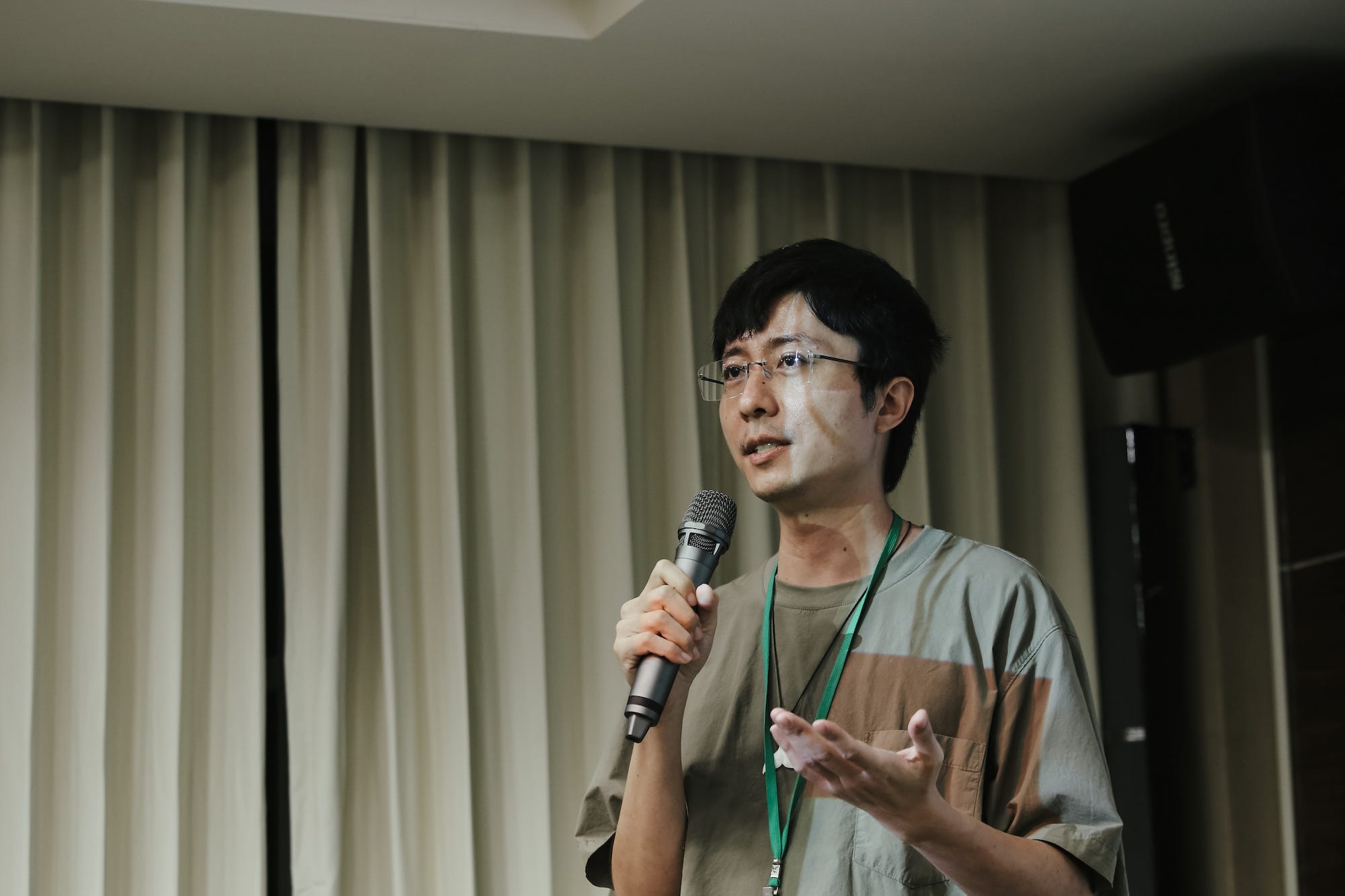
Clinical psychologist 彭聲傑 (Sheng-Chieh Peng) first came to the camp three years ago as a camper with a mission: to find others who might care about a story as much as he did.
At Hualien’s Yuli Hospital, he had been caring for 寧人 (Ning Ren), an elderly man who insisted he had been imprisoned during the White Terror. Ning Ren first experienced auditory hallucinations while in detention, he was later diagnosed with schizophrenia. He then spent two decades moving between homelessness, shelters, and psychiatric institutions. Through it all, he kept telling his life story, though often in fragments that sounded too extraordinary to be true. It wasn’t until Taiwan’s transitional justice process opened the archives, and researchers began piecing together historical records, that his account was finally corroborated.
His great-uncle had indeed been commander-in-chief of the KMT Navy. Ning Ren had indeed been imprisoned after publicly declaring, among other things, “Long live the Chinese Communist Party!” Even his improbable account of working as an informant for the Ministry of National Defense after his release proved to be true.
During his years in psychiatric institutions, Ning Ren underwent repeated courses of electroconvulsive therapy, which he believed damaged his memory. When Peng asked the elder how he could still recall so much of his life—and in such vivid, meticulous detail—Ning Ren replied that he practices remembering every day. Each day, he rehearses modern Chinese history, his own life story, current events, and even recent conversations so he won’t forget them.
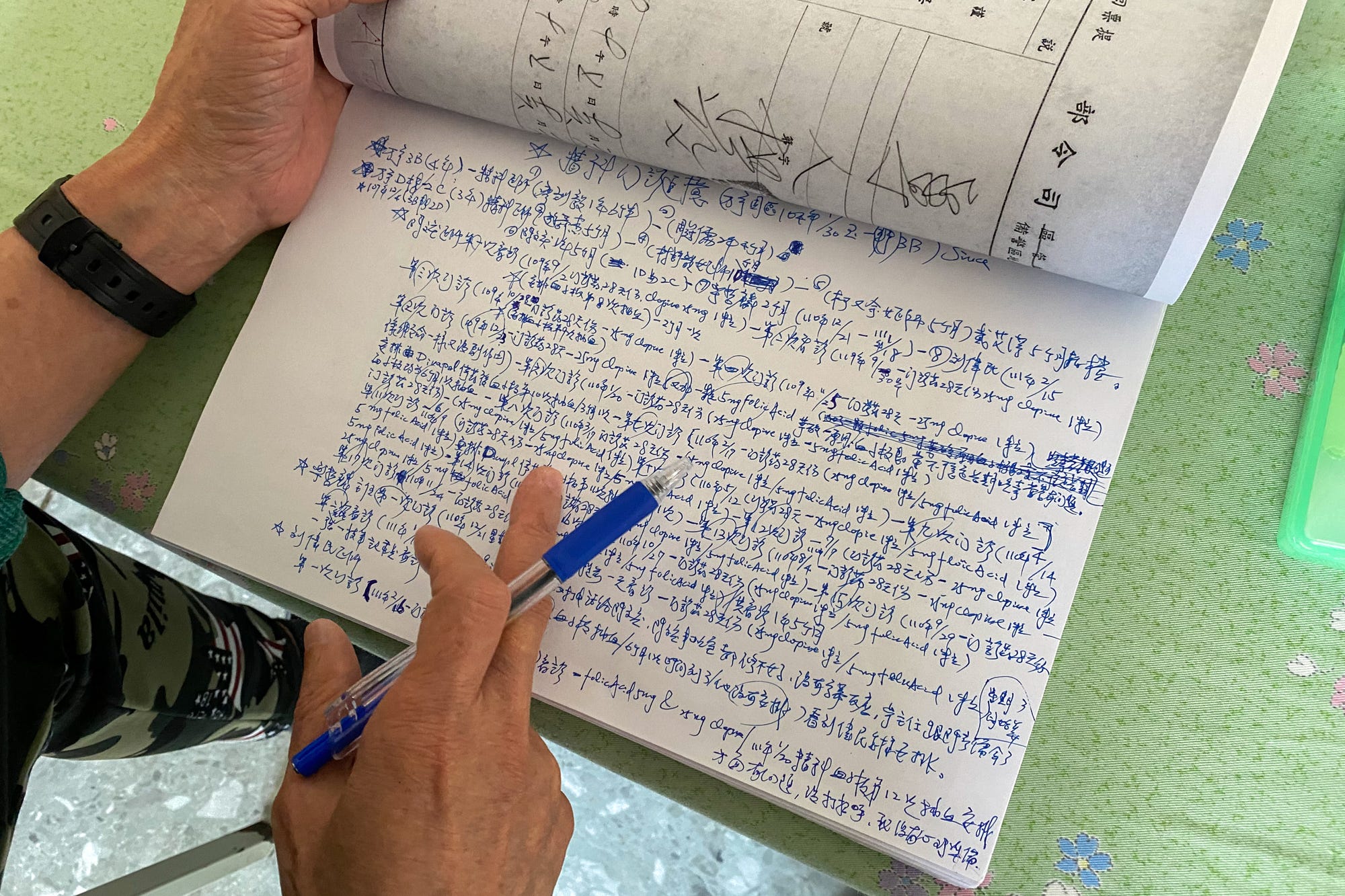
When Ning Ren said he wanted to write a memoir, Peng immediately affirmed his desire and set out to help, only to realize he had no idea where to begin. So three years ago, he had come to this camp in search of volunteers. Would anyone be willing to transcribe interviews? Verify historical records? Edit a manuscript? Hands went up. Within minutes, a team had come together. Now—three years, one book, and one documentary later—Peng was back, this time at the front of the room, telling us what had grown from that act of asking.
Peng is now a regular speaker at the summer camps. Each time he comes, he records messages from participants to bring back to Ning Ren at the hospital—the elder is now 80, and his health no longer allows him to travel. This year, Peng carried more than 30 videos back to Hualien. One by one, he played them. As each face appeared onscreen, Ning Ren would smile, wave back at the phone, and chat with his young well-wishers as though they were sitting right in front of him.
A few days after camp, Peng sent me a two-minute video. Wearing one of his signature bright red caps, Ning Ren responded to those of us who’d shared greetings from camp. “You all seem to think pretty well of me,” he chuckled.
Then, after a pause, “Watching your videos really moved me. Young people today are different from before—you want to ask me questions, you want to listen. I can tell you’ve really thought about politics.”
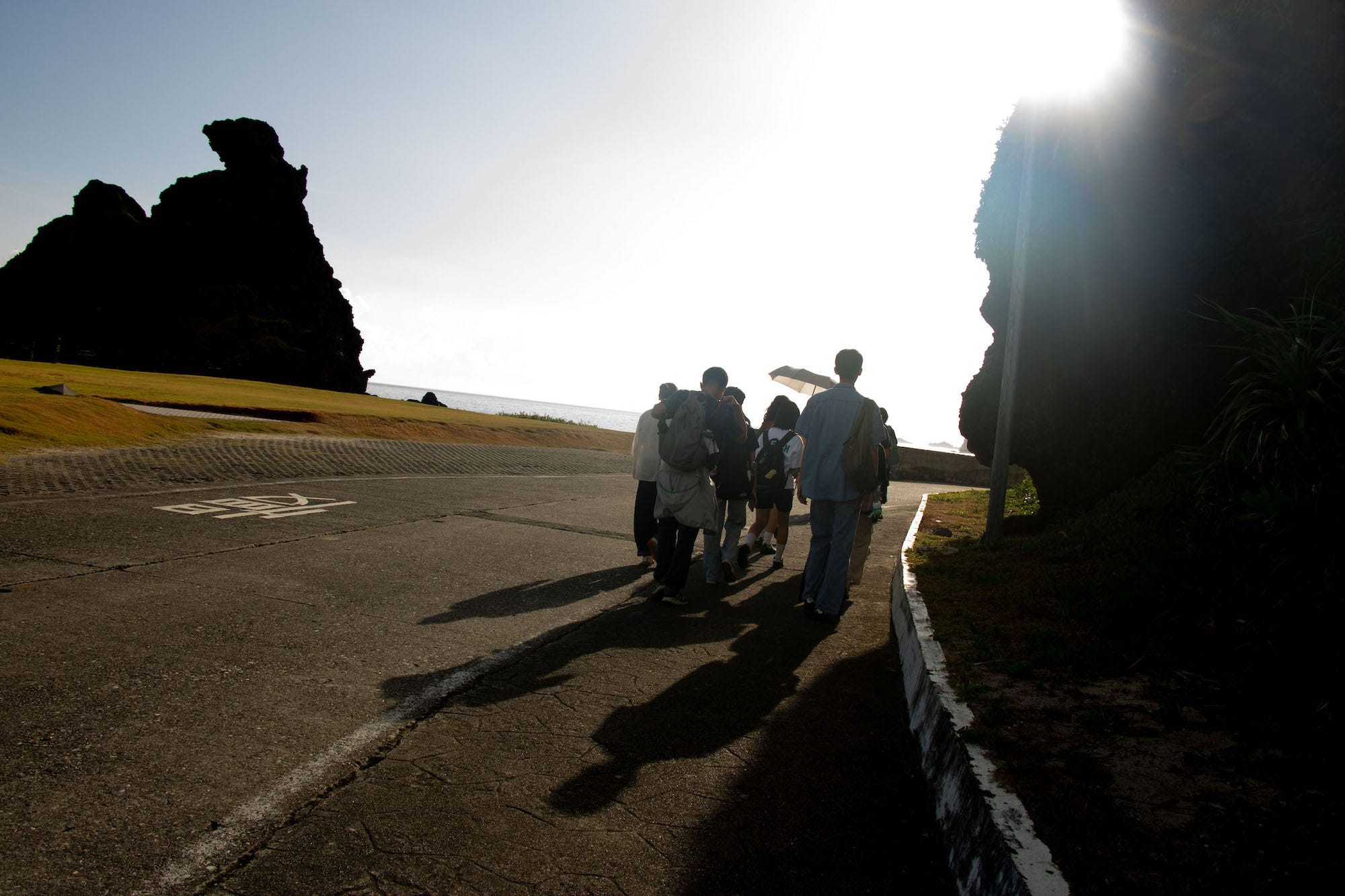
On a walk by the sea, a 16-year-old from Tainan burst into tears when I asked why she had come to camp. It had seemed an innocuous enough question. I wrapped my arms around her and tried to steady her breathing with my own.
At school, she told me, she often felt alienated because she cared about transitional justice. Classmates mocked her for wanting to watch a documentary about Tsou leader and White Terror victim 高一生 (Uyongʉ Yata’uyungana). Her mother was baffled by her interest and couldn’t understand what any of it had to do with her studies or her future. But here, for the first time, she found herself among people who were asking the same questions. Here, she didn’t have to defend herself or explain why this history mattered.
Another 16-year-old from Kaohsiung told me over a pork chop bento that she never dared bring up anything remotely political in conversation unless two conditions were met: first, the other person had to be a close friend. Second, they had to share her politics. She was terrified of being labeled a party lackey.
J, a computer science major from Taichung wearing a faded Pokémon T-shirt, told me he’d signed up for last year’s camp after watching a documentary about the White Terror. He wanted to meet people who had lived through that history and ask his own questions. Friends were merciless in making fun of him, convinced he was either an unwitting pawn of the Democratic Progressive Party or was simply going to meet girls. Why else would anyone spend their summer at a human rights camp? History was deeply uncool. Transitional justice? Social suicide.
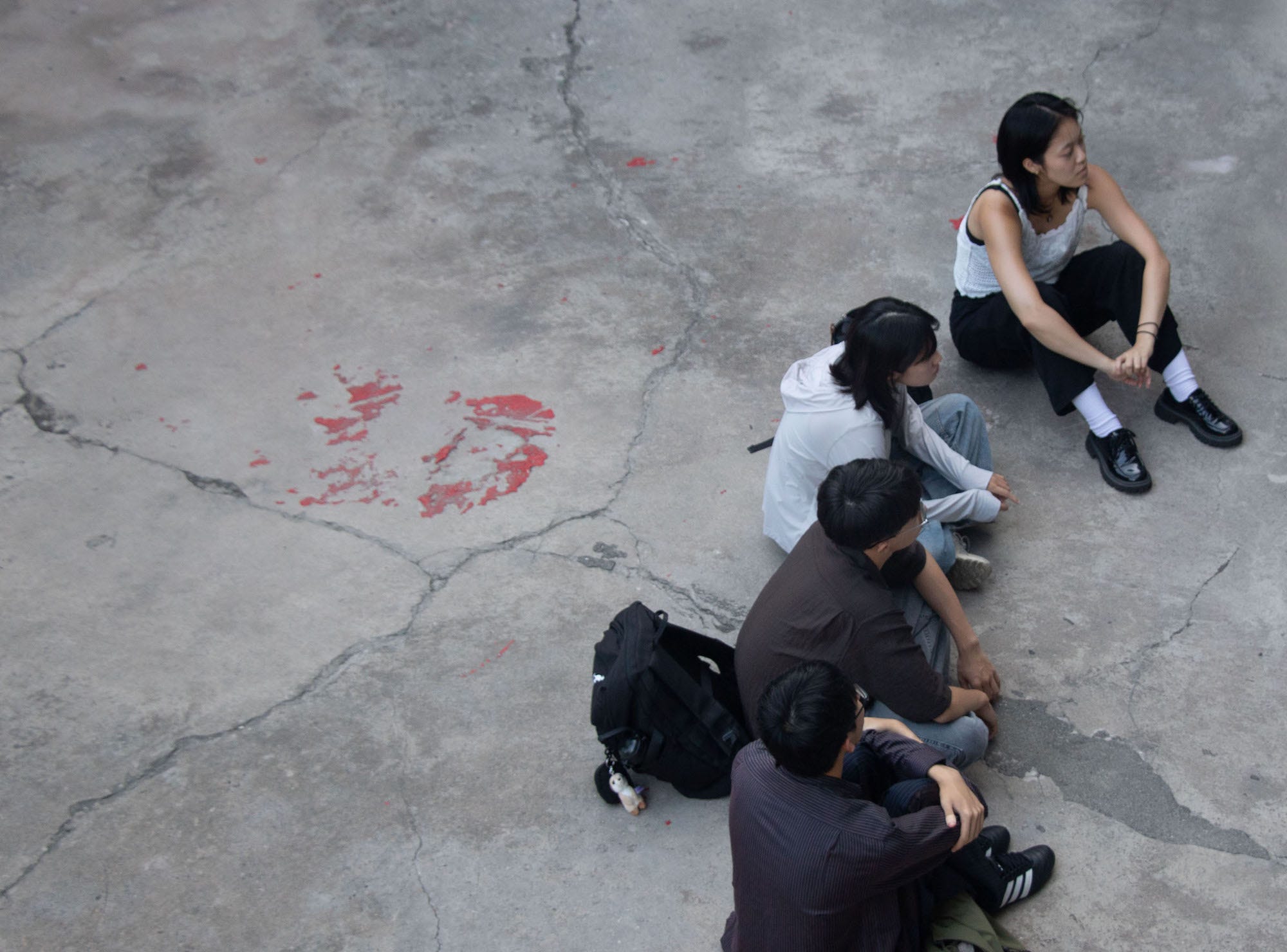
In my conversations with these bright, thoughtful young people, the fear of being ostracized for their interest in transitional justice came up again and again. Many told me they’ve had very few opportunities to practice talking face-to-face about politics. They’d gotten their first smartphones in their early teens, and had grown up watching political conversations unfold online where, safely behind pseudonyms and avatars, debates quickly devolved into vicious name-calling.
I thought about how my own political formation had intersected with the rise of digital culture. I didn’t get online until I was 14. In those early dial-up days, flirting in AOL chatrooms (a/s/l?) and lurking in drum n bass IRC channels meant sitting in front of our family’s single giant computer and tying up our only phone line for hours. As I moved through university and into early adulthood, politics was something we talked about on the couch in the student newspaper office, sprawled on the campus lawn, at marches and rallies, and around dinner tables.
At the risk of sounding like a curmudgeon reminiscing about “when I was young…”, the internet I came of age on felt fundamentally different. Conversations could get heated, but people still had to look one another in the eye. Questions and disagreements were things we wrestled through together, not “content” we performed for a faceless, limitless audience. I got on Twitter at 25, and was immediately taken by how it let me connect with others who shared my then-obsession with cradle-to-cradle design. I didn’t get a smartphone until my late twenties.
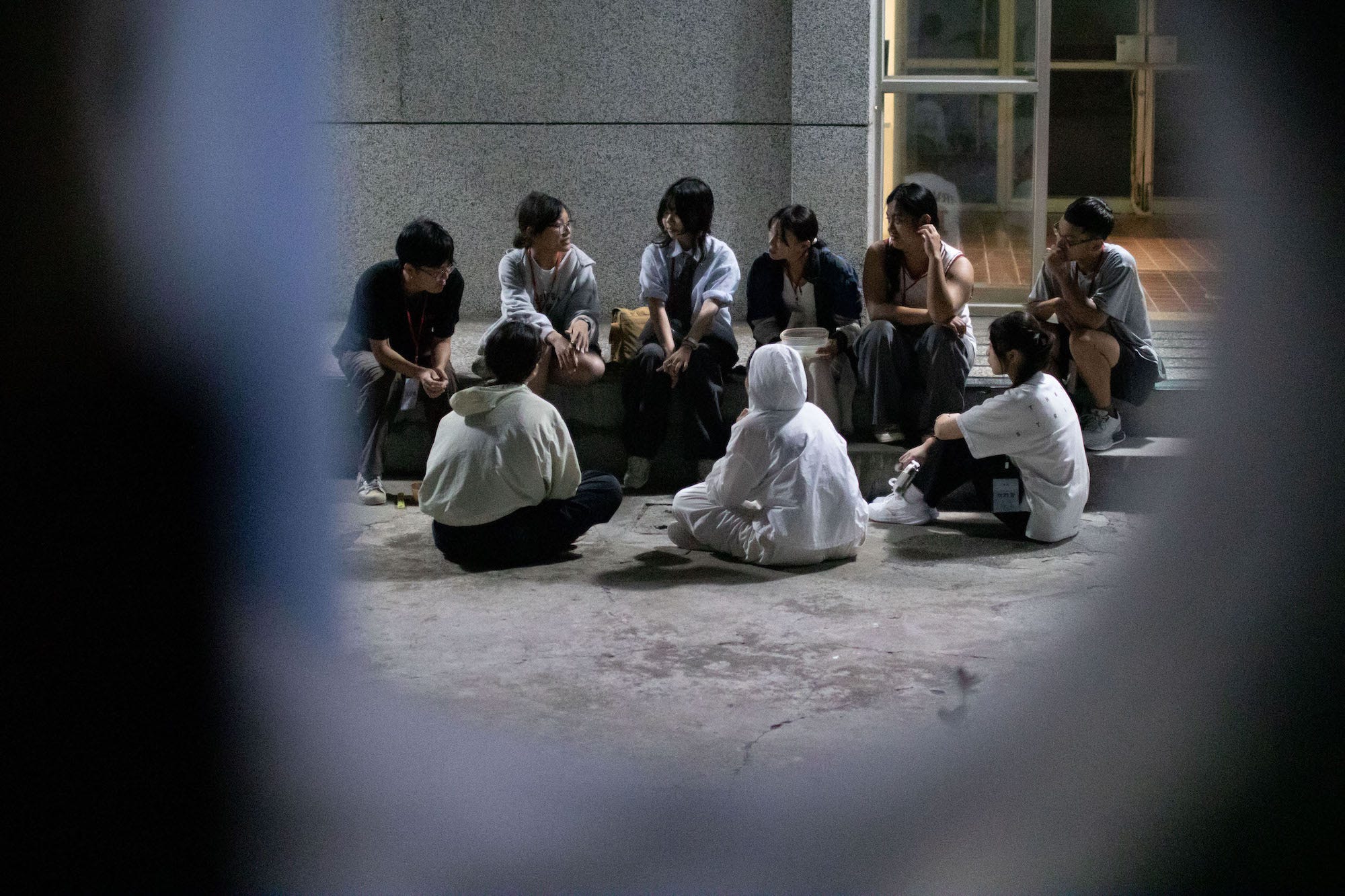
As these young people described their fears that political debates in person would collapse into the same kind of humiliation they’d seen online, I found myself feeling unexpectedly tender toward them.
Over years of facilitating messy, difficult conversations, I’ve watched people with profoundly different politics surprise one another with curiosity, generosity, and sometimes even friendship. I’ve also watched them discover what they actually believe by trying to explain it to someone else, or come to change their mind by hearing another’s story. Understandably, these high schoolers hadn’t yet had many chances to experience that—but what worried me was that they were terrified of trying, which then meant they might never get to.
What do we lose when young people no longer believe that it is possible to think together across difference?
Still, despite his friends’ mocking, J came anyway. Last year, he sobbed as he listened to Elder Fred Chin speak. (I’ve done the same, more than once, and have written about how Elder Fred has influenced my own journey.) This year, J is back as a volunteer. Somewhere over those two summers, his ambitions had begun to shift. Now, speaking with the excitement of someone who’d stumbled onto a world he wanted to plunge into, he agonized over whether computer science was the path for him and whether to change majors in his third year.
He still loves computers, he told me, but he’s begun asking a different question: What is worth devoting a life to?
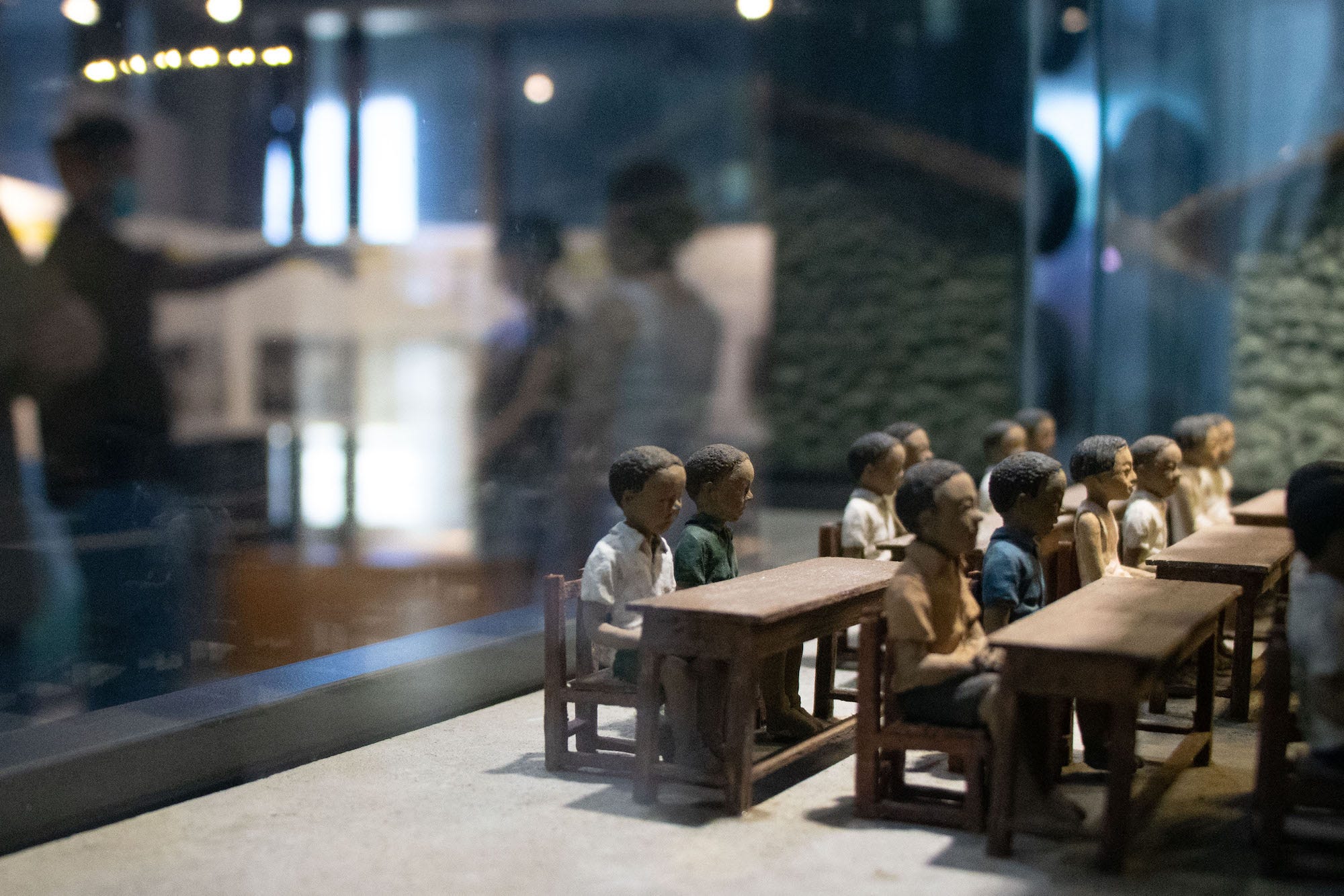
On the last day, campers fanned out across Green Island, tasked with persuading tourists to join impromptu tours where they would share what they had learned at camp. It was peak tourist season, and most people on the island had come for seafood and snorkeling. As I watched the students work up the courage to approach strangers, I was moved by the contrast between the passionate teenagers I’d just had lunch with and the awkward statues they’d suddenly become.
After a few rejections, some campers offered to take a family’s photo at a scenic lookout. Only after snapping the photo did they explain that the spot was known as Devil’s Gate, and it once marked the path prisoners walked on their way to prison. Might the family be interested in a tour?
The dad, his arm thick with tattoos, nodded eagerly—he wanted his kids to learn something while on holiday. The mom, in tiger-print leggings and bright red lipstick, took out her phone and began filming the campers. Their two children, teenagers not much younger than their new tour guides, wore practiced looks of disinterest.
Those looks didn’t budge as we walked into the prison and moved from room to room. When we got to the cells, a camper ventured a question: “How many people do you think were kept in here?”
The boy shrugged, “Maybe six?”
“Up to twenty.”
A flicker crossed the boy’s face.
At the next stop, as we peered into an unassuming room its plaque identified simply as “Carpentry Unit”, another camper recounted how in this room, a prisoner had attempted suicide three times before succeeding on the third, a story he’d heard from an elder just that morning. The group fell quiet. The plaque made no mention of this. The two kids were no longer checking their phones.
At the end of the tour, the mom thanked the campers:「你們真好」 (“you’re all so wonderful”) and her teenagers smiled shyly. The campers stood a little taller.
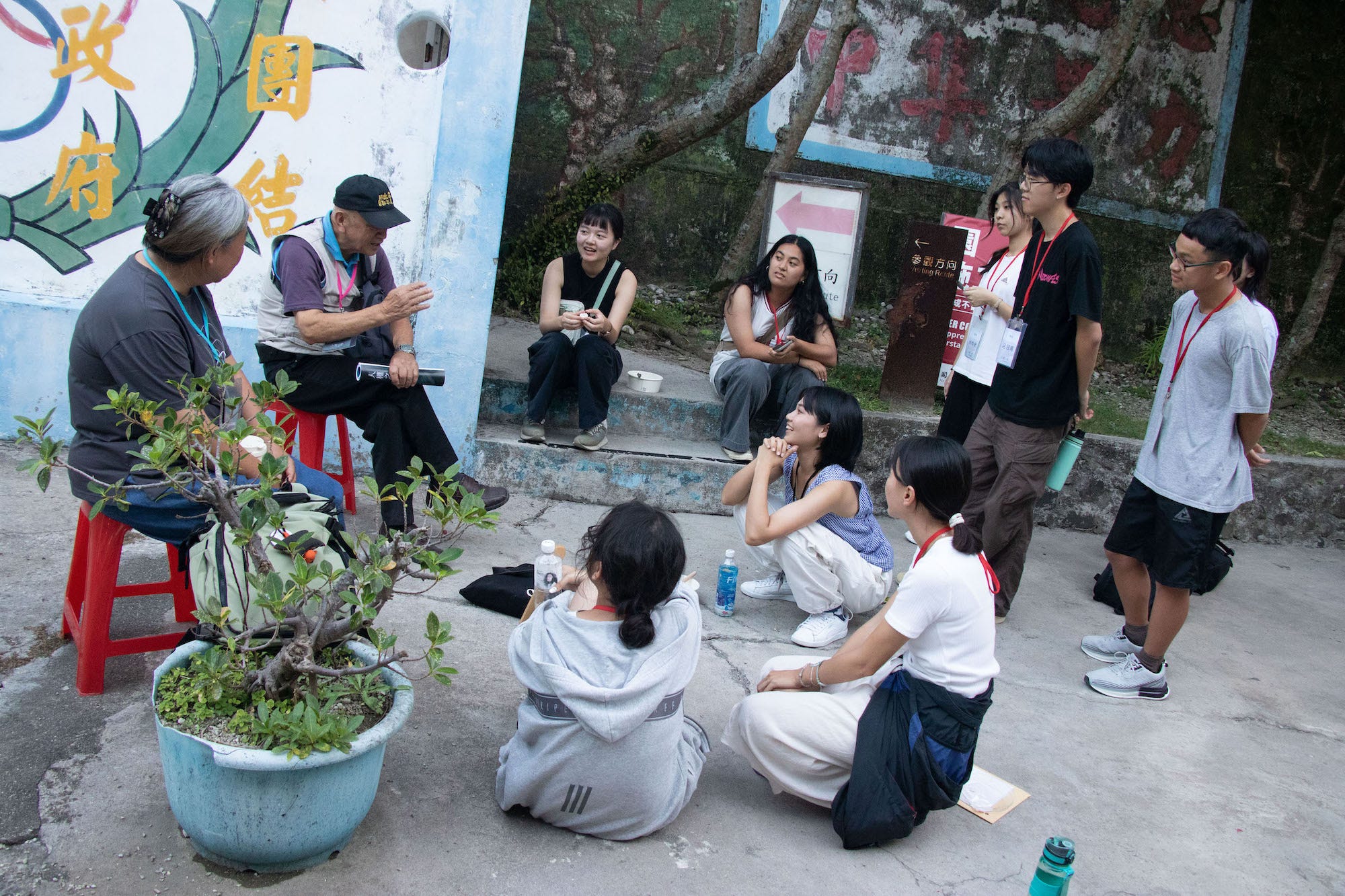
As I watched, it was hard to reconcile these young people with the caricatures so often projected onto them: the fragile 草莓族 (Strawberry Generation) or the 民主富二代 (roughly akin to “democracy’s trust-fund babies”) who supposedly inherited freedoms they never had to fight for and therefore did not value.
These campers had chosen to spend a week of their summer delving into transitional justice archives, learning about the unfinished work of redress for Indigenous communities, and chatting into the wee hours about what it means to carry this history forward.
On the last night, the Oasis Villa courtyard was scattered with laptops and notebooks as campers prepared for their final presentations. Beneath an inky, star-filled sky, circles of campers slurped bowls of aiyu jelly while editing short films, refining board games, and debating how best to share what they had learned—and what it had come to mean to them.
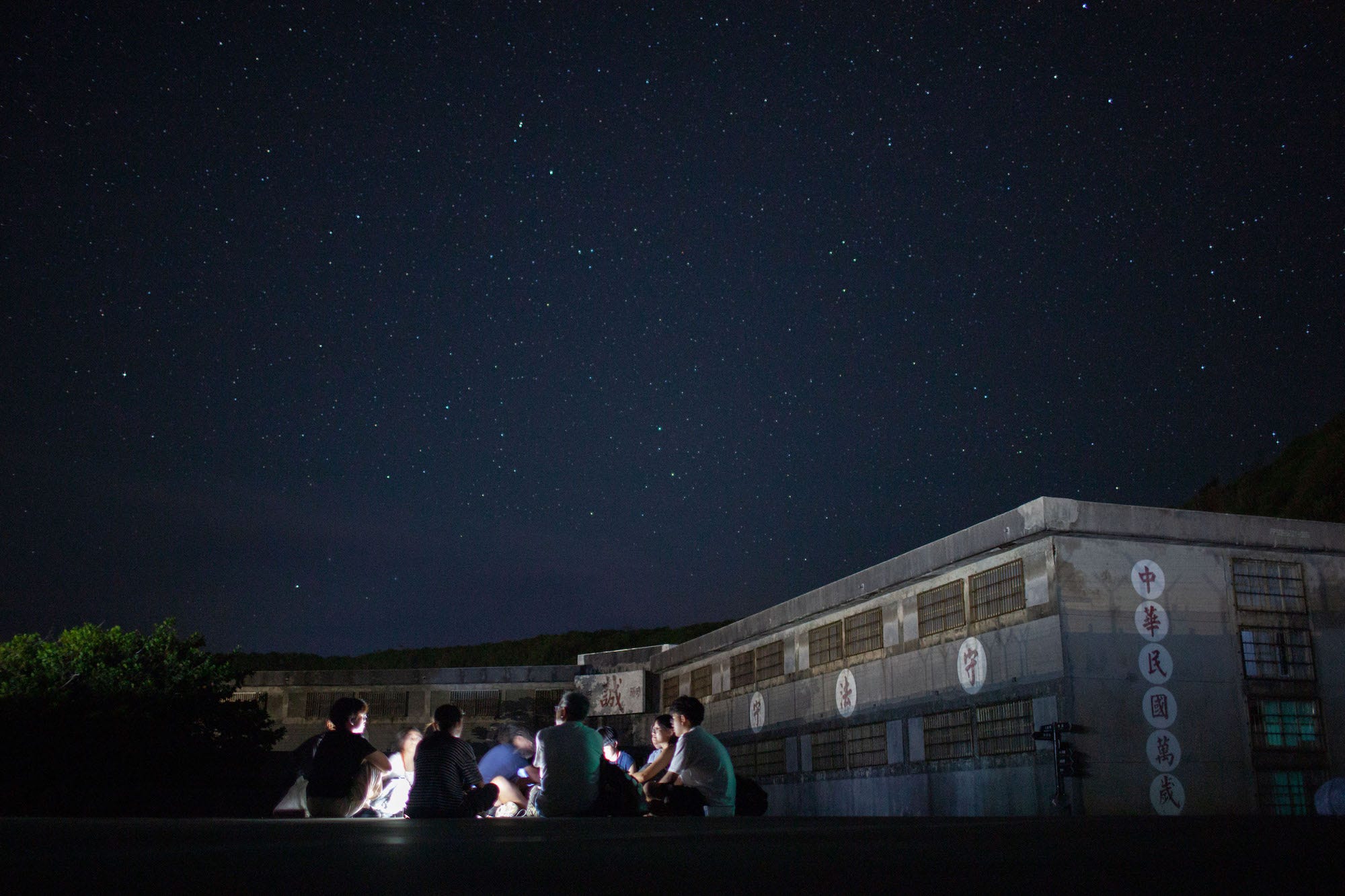
As I watched one group practicing their speech, their shyness from the first day nowhere in sight, I found myself thinking about just how much had changed in four days.
What a relief it must be to, at this age, find a place where you no longer have to defend what you care about.
And what a lifeline to discover others who care just as much as you do, at a time when you are still deciding who you want to become, before the world convinces you that caring this deeply is naïve.
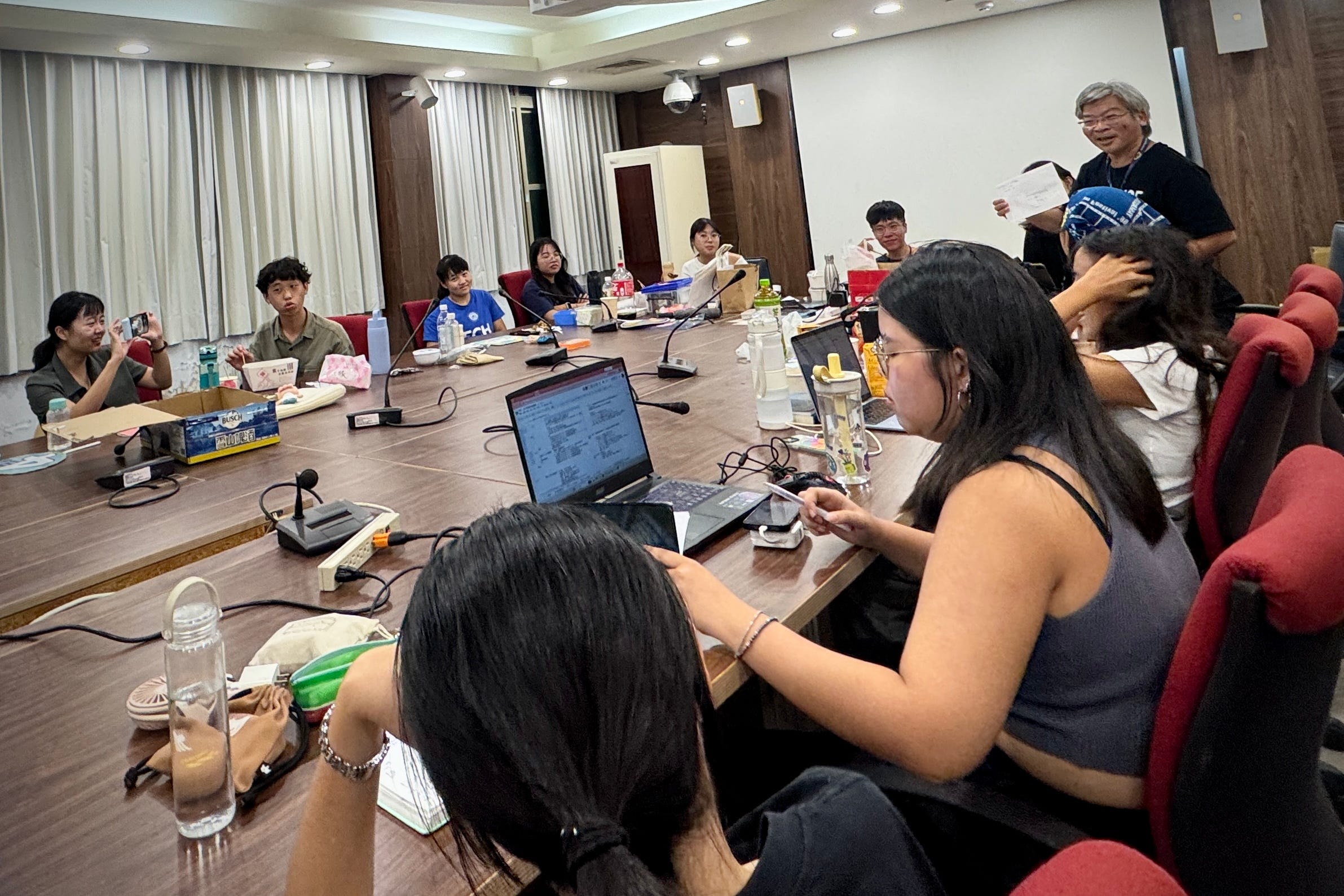
I left the aiyu jelly crowd around 9:30pm, and slipped into the conference room upstairs. The day’s debrief was already underway. Around two dozen volunteers—mostly university students who had once been campers themselves—sat at four rectangular tables pushed together. Among them was 張龍僑 (better known as 龍三Long San), director of the Chen-Wen Chen Foundation, and on a stool behind him, his brother 龍四 (Long Si). It was the first time all camp I’d seen the two of them sitting still. They seemed perpetually in motion: finding coffee for volunteers, loading vans, taking out the garbage, checking on the elders.
Cardboard cartons from the neighbourhood 鹹酥雞 lay open across the tables. Volunteers absentmindedly speared fried chicken and crispy tofu with bamboo skewers, feeding one another and chewing as they tapped away on laptops, sometimes leaving sticks dangling from their mouths while they listened.
Someone wondered whether Elder Fred had been given enough time after speaking about his mother. That morning, he had revisited the memory of her surprise journey from Malaysia to Taiwan and the day she finally found him on Green Island. Standing in the very visitation room where they had been allowed just ten minutes together through the glass, he then sang the song that brought him back to the most painful moment of his twelve years in prison. Afterwards, he was visibly shaken. How do we make sure the elders have enough space and support to reground themselves after sharing their stories?
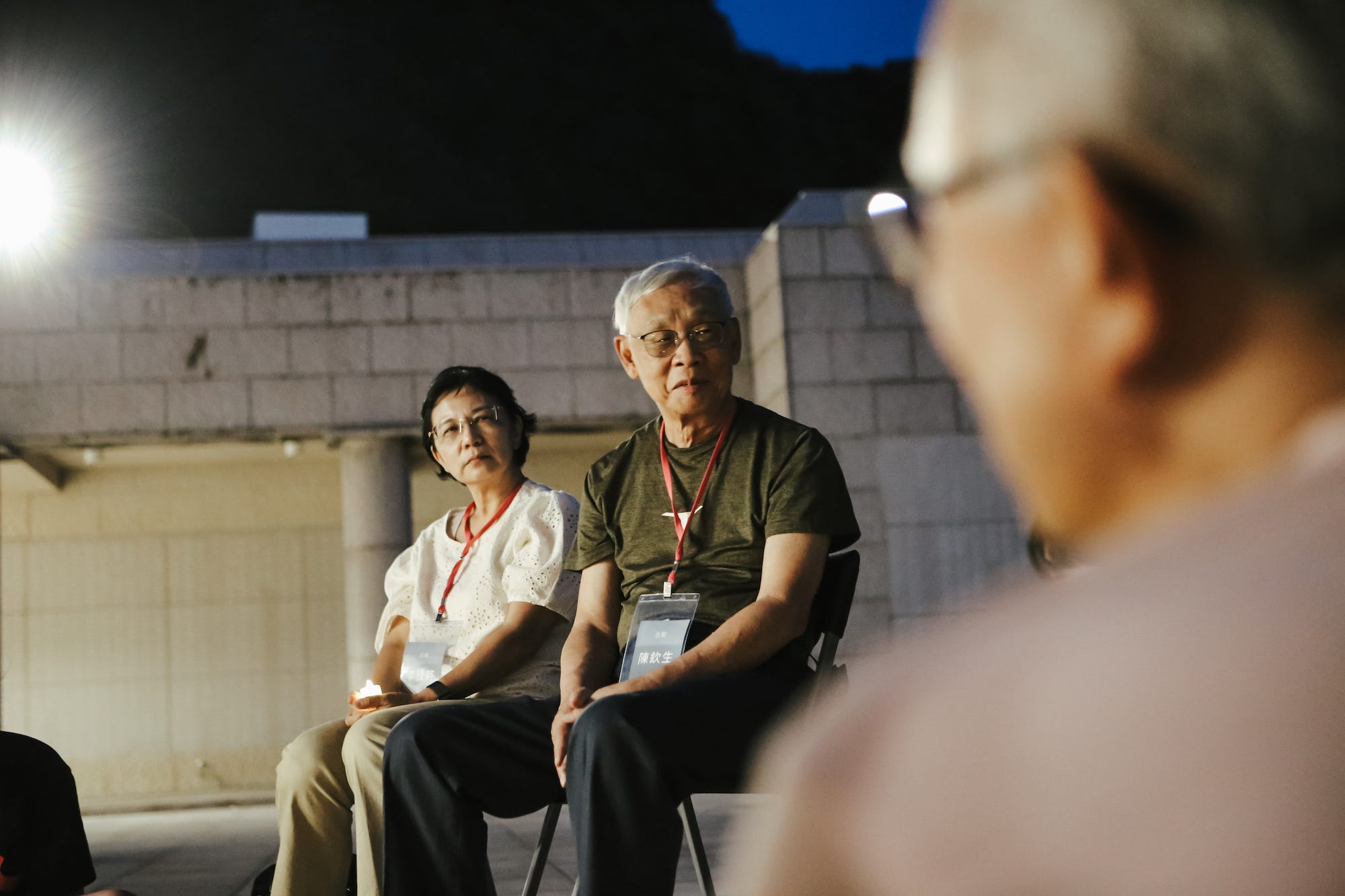
Someone raised another question. During one exercise, students had been locked inside prison cells and asked to write letters home. But the envelopes they were given looked wrong—they didn’t match descriptions of envelopes from that era. The group then spent the next fourteen minutes discussing the envelopes: Should they be vertical or horizontal? Where should the address go? Weren’t postal code boxes only introduced in the 1970s? Could they afford to buy historically accurate envelopes? The budget was tight—but getting it right mattered.
An elder’s memory had become less reliable with age. How do we gently correct factual inaccuracies without undermining his authority?
A camper had made several mistakes while giving a tour. How do we help them improve while preserving their enthusiasm?
Some elders struggled to read the song lyrics during the evening vigil. Should we bring tablets next time, so the words can be enlarged? What about a projector?
How do we encourage the accompanying spouses to tell their own stories, and to recognize that their experiences and suffering matter too, not just those of their formerly imprisoned husbands?
As it approached midnight, the conversation had slowed. The buckets of fried food were nearly empty. Organizers leaned back in their chairs, rubbing their eyes and stretching stiff backs. Every so often, someone would glance at the clock, then return to the discussion as if there was nowhere else they ought to be.
As I doodled in my notebook trying to keep myself awake during the unfathomably long conversation about envelopes, I realized it had been a decade since I’d last conducted an institutional ethnography. Back then, I spent a year following USAID bureaucrats across Uganda, Zimbabwe, Indonesia, and Washington, shadowing international “development” programs. Those meetings had revolved around efficiency, value-for-money, and scale; value depended on what could be quantified and thus proved.
In this room, nothing about the value of the work was in question. That certainty changed the texture of the meeting. The volunteers lingered over historical details and got into the weeds of how best to care for the elders. Here, memory didn’t feel like something to preserve in the abstract—it was something practiced, one careful, intimate decision at a time.
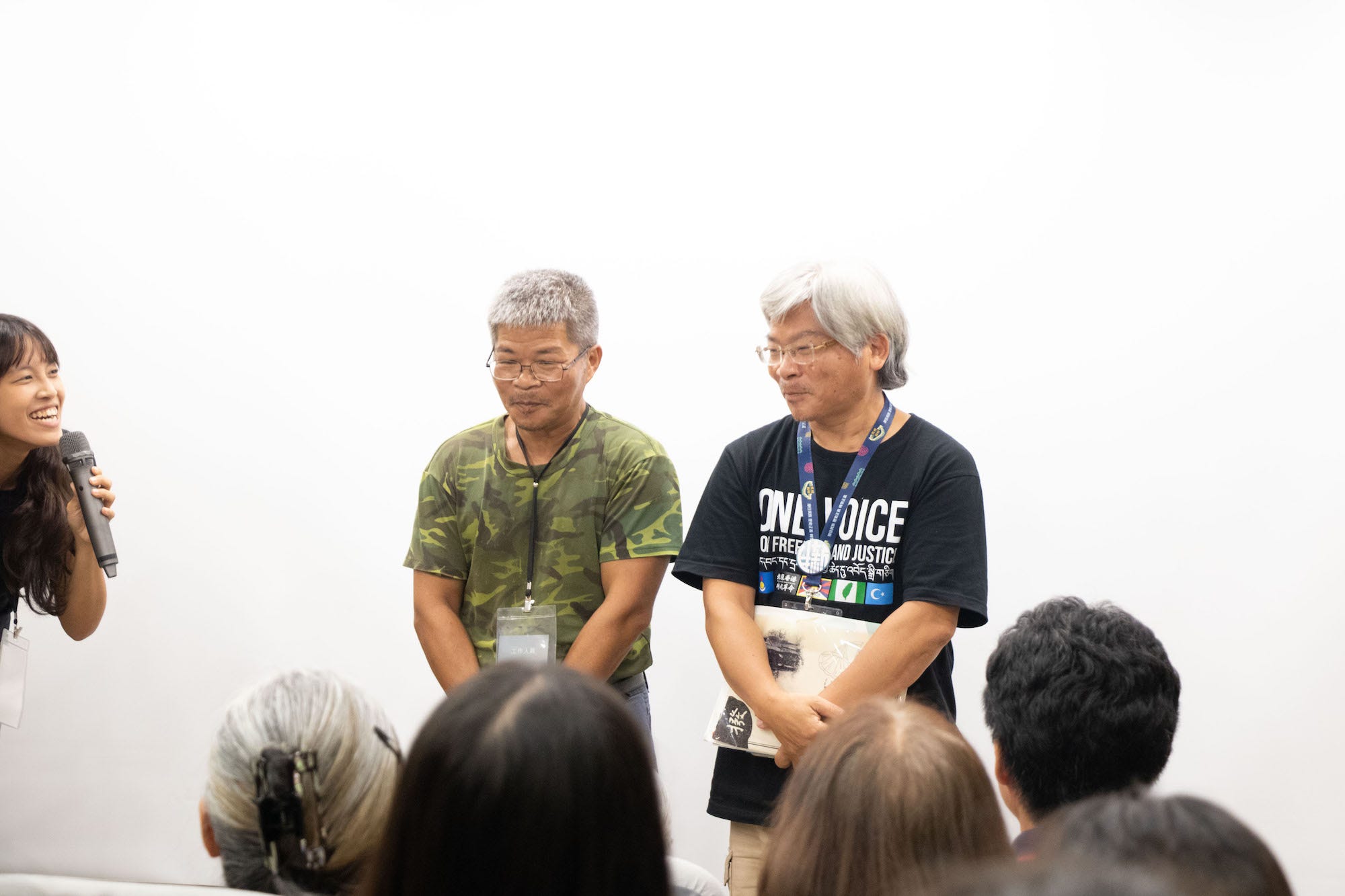
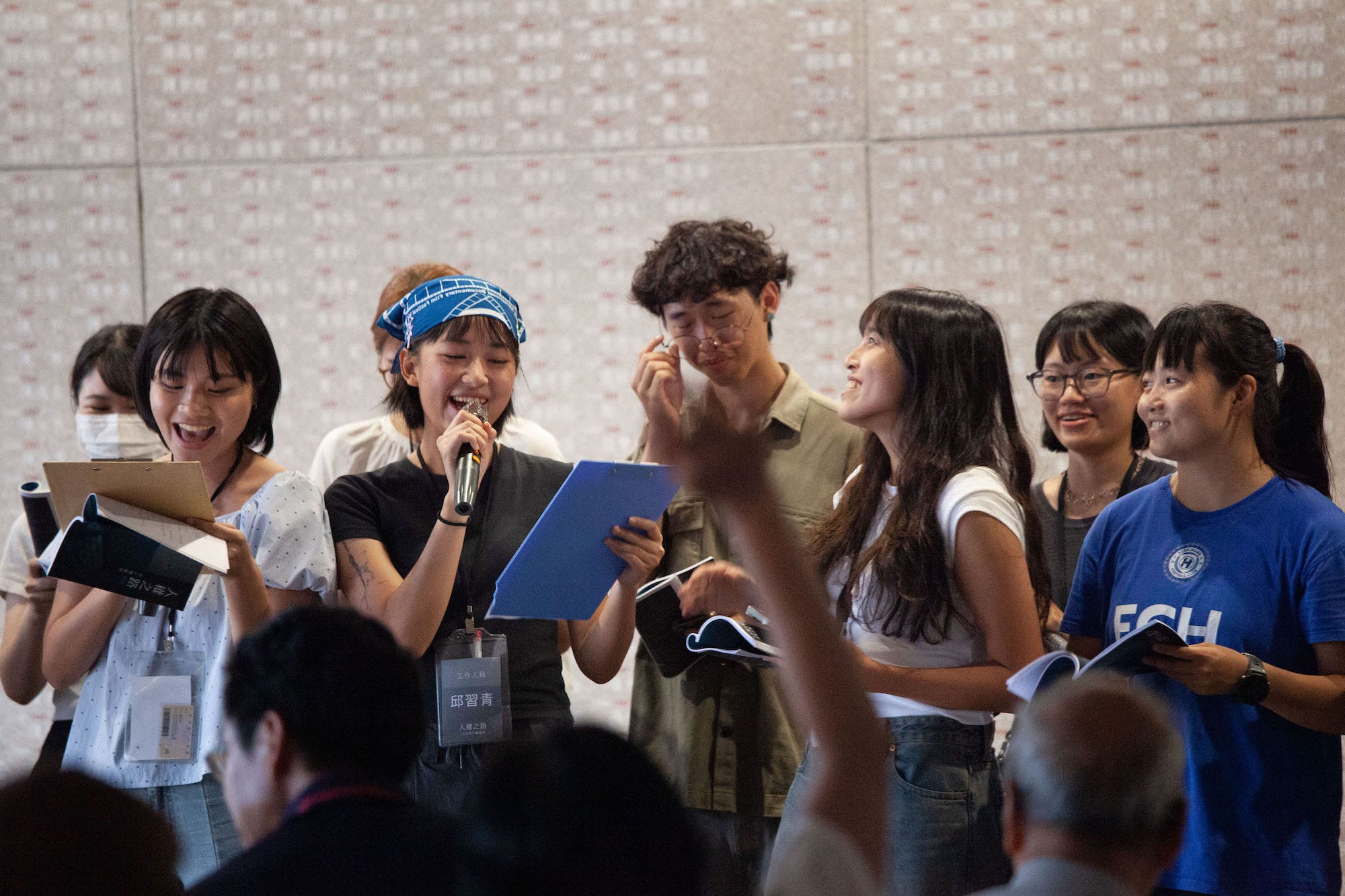
Watching them, I wondered whether part of what made the camp so successful was that it was largely stewarded by young people who hadn’t yet been asked to justify this kind of care within funding proposals and impact frameworks. They were able to optimize for tenderness because Long San shouldered the outward-facing burdens: advocating for this work, proving it mattered, and translating its value into metrics institutions could understand.
I then found myself feeling unexpectedly protective of these young people. I suspected many of them would, in the not-too-distant future, find themselves slogging through grant proposals, eking care out of barebones budgets, and explaining—again and again—why this work deserved to exist. For the time being, though, they were simply free to ask how to care better.
I hoped they could stay there for as long as possible.
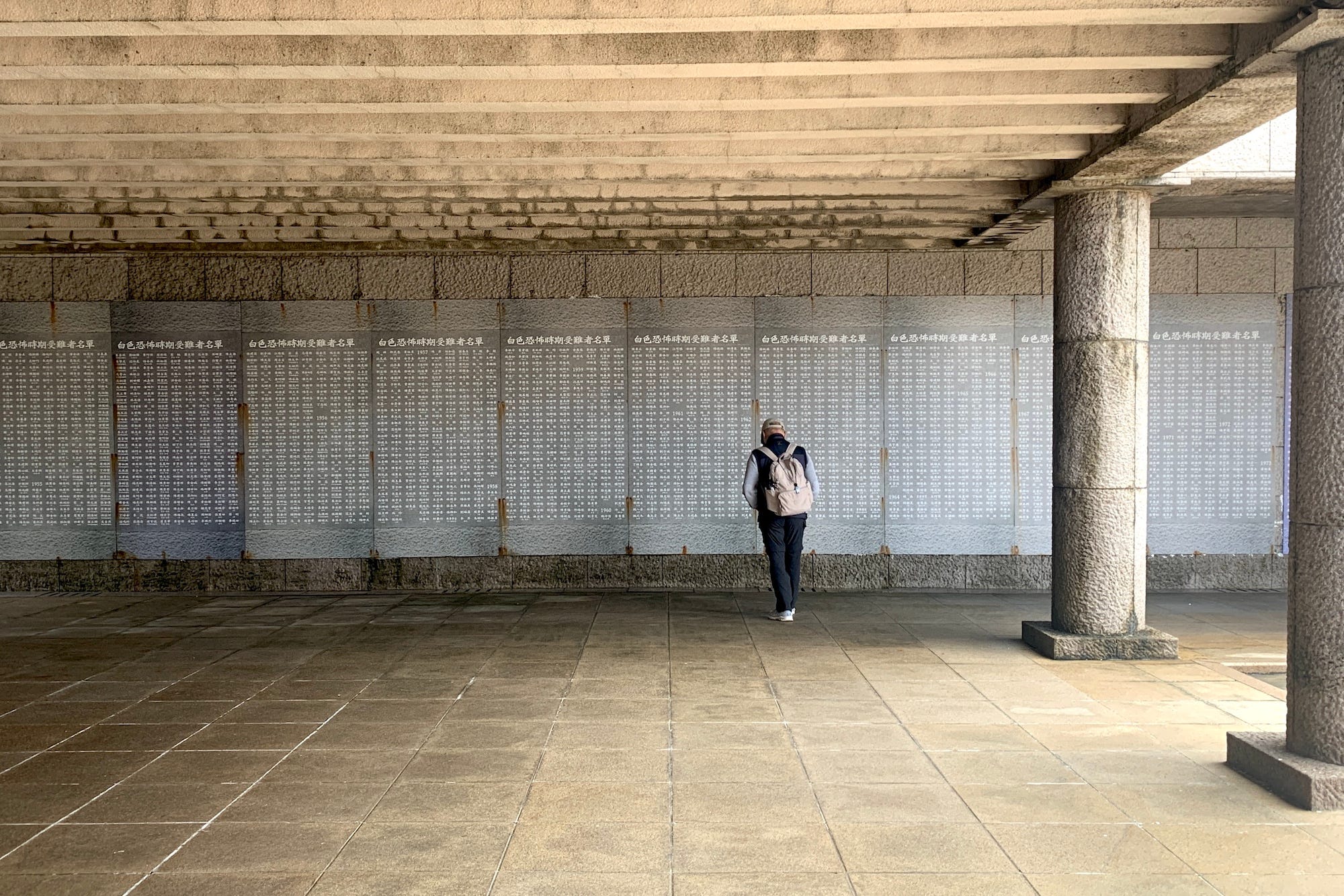
Three years ago, before I moved back to Taiwan, I took a trip with my dad to Green Island. We had a family member who had disappeared during the White Terror, and we never learned what happened to him. His name doesn’t appear in the official archives, and we’ve never been able to find any record of him.
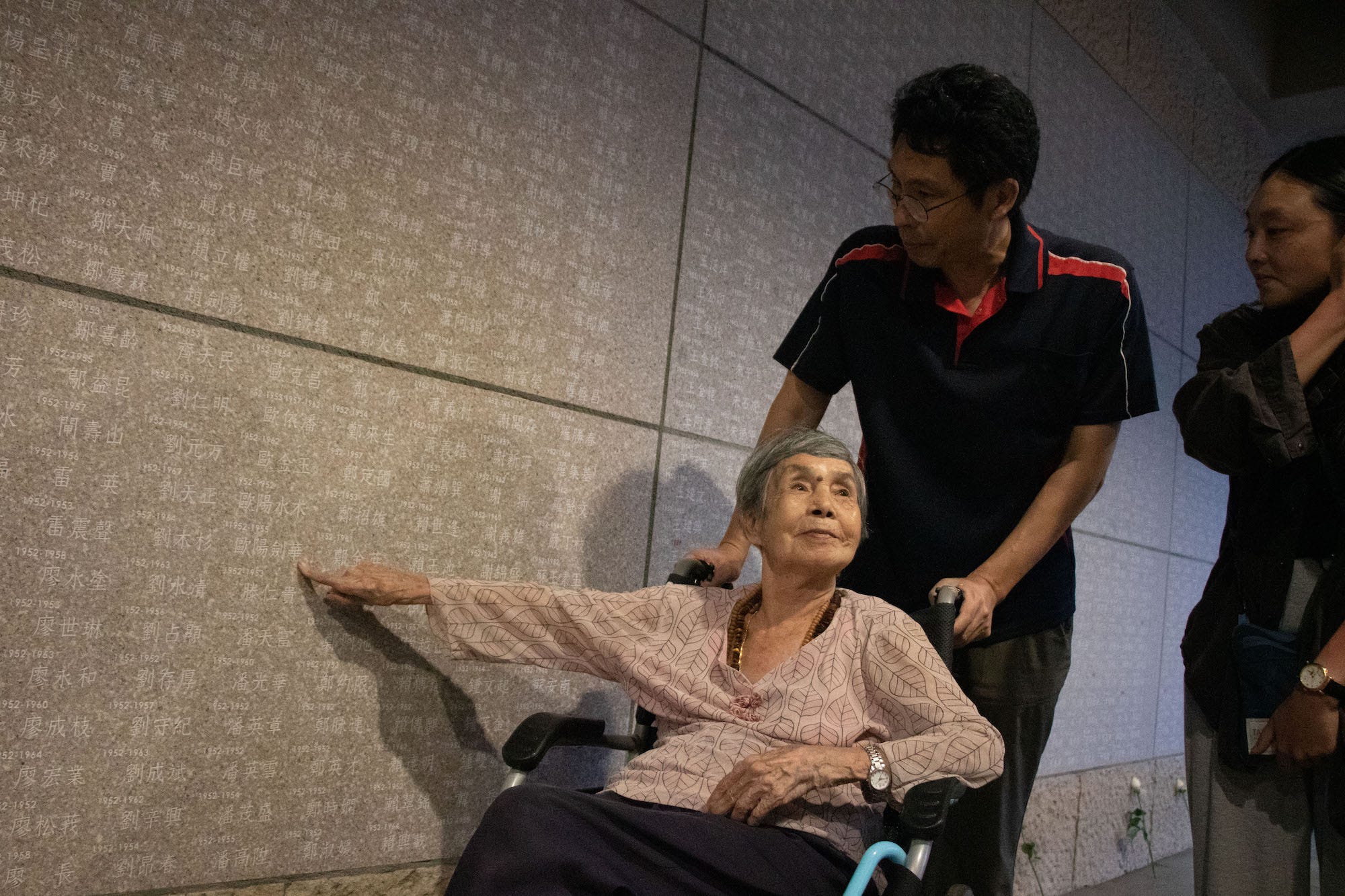
Ba somehow believed he might have been imprisoned on Green Island, so one chilly March afternoon, we stood together before the memorial wall, reading every name etched into the stone, trying to find his. We never did.
A big part of the reason I returned to Taiwan was to learn from its efforts at transitional justice, and hopefully contribute to the broader work of collective reckoning and repair—for the White Terror, and for Indigenous communities. After years of working on questions of memory, violence, and repair elsewhere in the world, I wanted to understand how my own homeland was grappling with its past.
Over the past two years, I’ve spent many hours in museums, lectures, workshops, and memorial events. They taught me a lot about how Taiwan is grappling with its painful histories, and about the victories and limitations of formal transitional justice mechanisms. But they were largely silent on the everyday work required to carry that history forward. I now have a sense of how institutions here are negotiating collective memory, but it was only at the camp that I began to understand how people are tending to and practicing it.
Elder Ze Zhou rises before dawn to carefully prepare our morning exercises. Elder Fred keeps singing the song for his mother, even though it breaks him each time. Ning Ren rehearses his life story every day, refusing to let it be taken from him. Peng treats him and every storyteller with deep respect, then invites in more listeners and stewards. Teenagers endure their friends’ ridicule because they believe this history matters. And over the years, hundreds of young people have decided that witnessing isn’t enough—that they, too, want to help carry this history forward and build a Taiwan where these stories never have to be lived again.
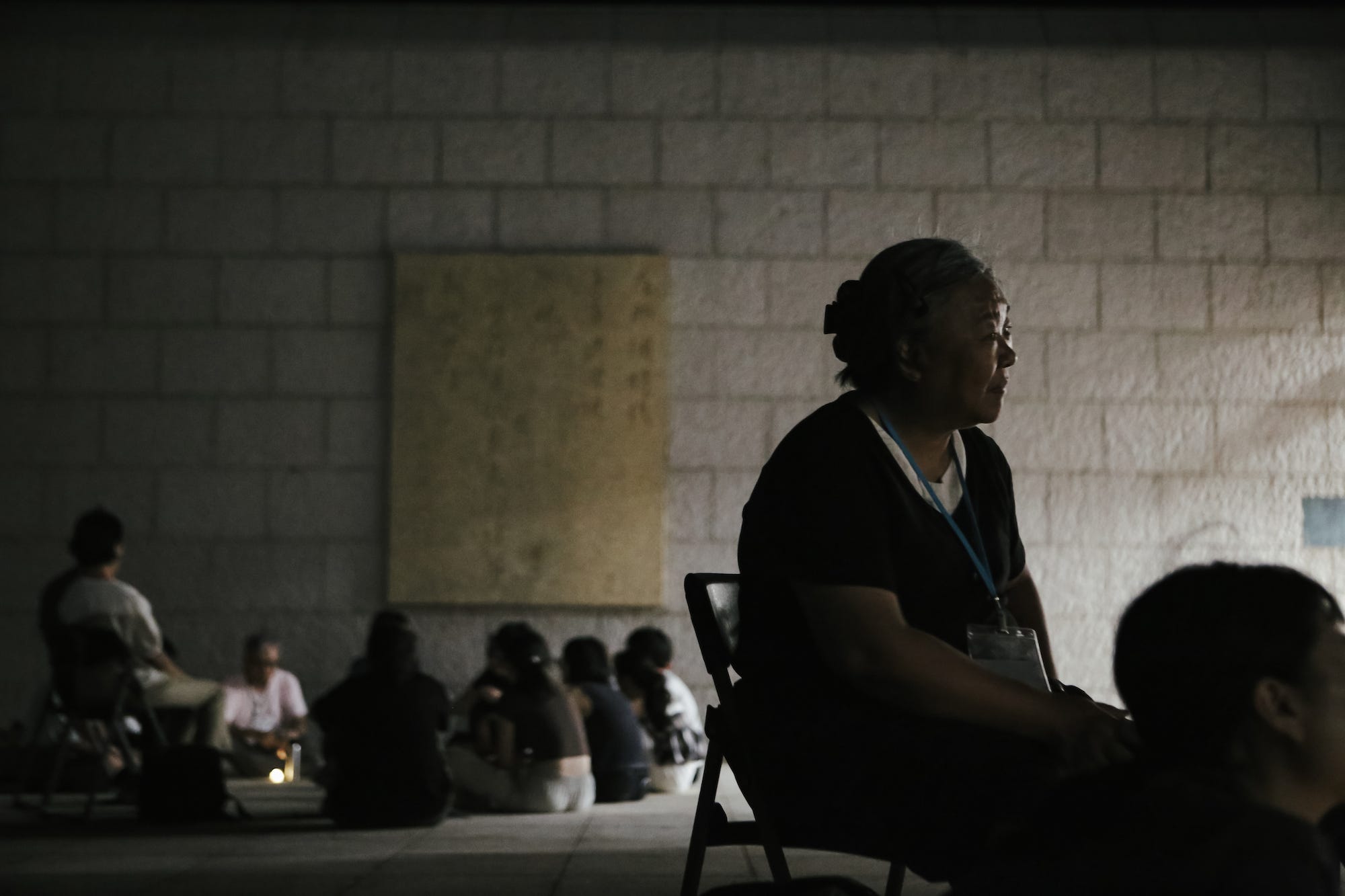
I’d come to the camp thinking it was about teaching history. But as I watched campers wrestle with how they could best serve Taiwan’s young, beautiful, vexing democracy—J wondering whether to give up his computer science ambitions, C spending his vacation days to volunteer here—I realized it was also about helping people decide what remembering asks of them.
Three years earlier, Green Island had been quiet. It was the off-season. Ba and I had wandered the memorial grounds almost alone, searching for one name we never found. I remember the heaviness he carried back onto the ferry.
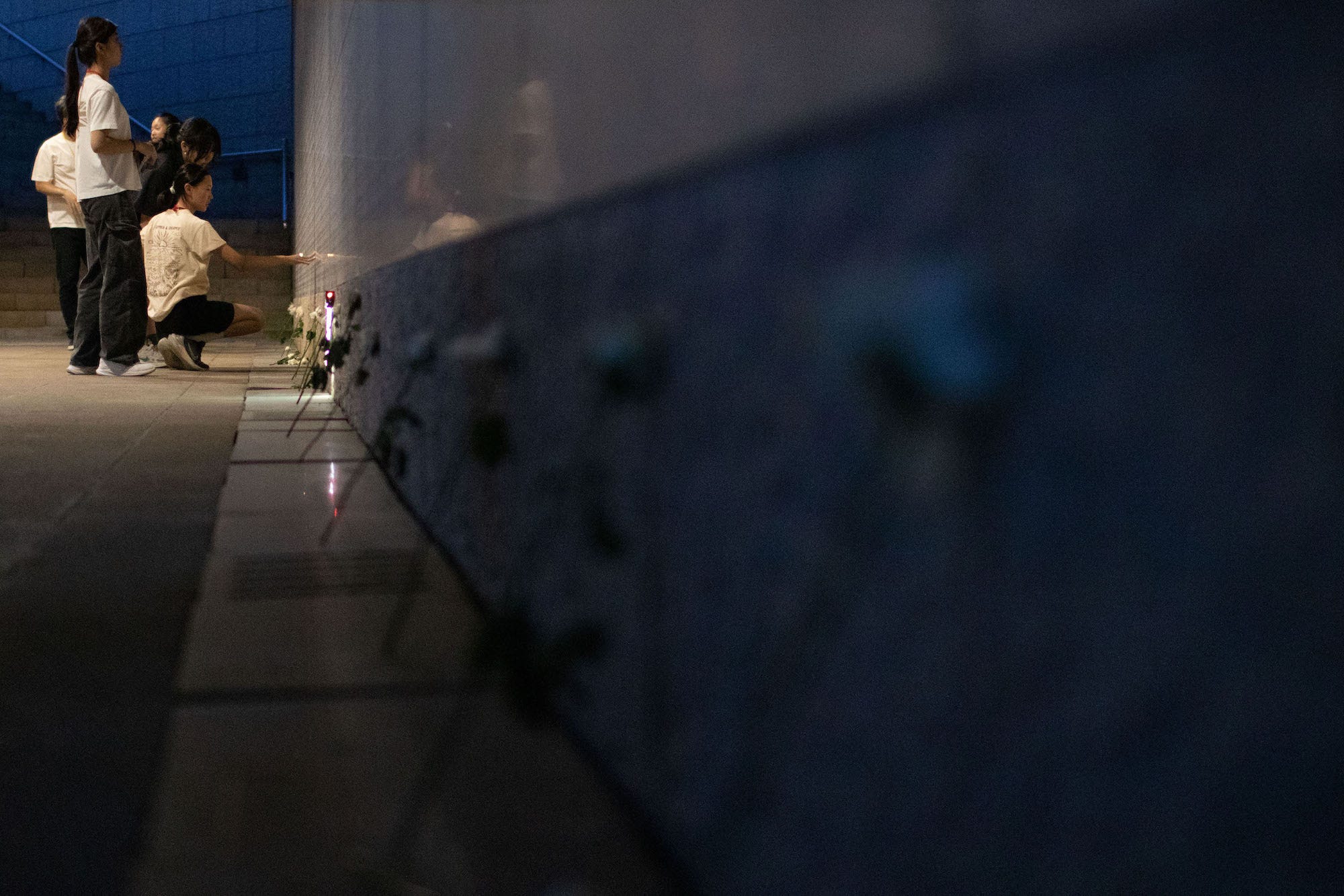
This time, I returned to the memorial at dusk, white rose in one hand and an electric candle in the other. The same space was now crowded with voices. Survivors pointed out their own names, and those of friends and family members, telling stories of those they had lost. Our accompanying professors pointed out the names of elders who had first called them into this work, back when doing so was even more professionally and socially risky, and as they spoke—sometimes through tears—they traced the lineage of their own commitment.
My family still hasn’t found our one missing name.
But somehow I left carrying many more.
Being at a camp of Taiwanese youth means learning an ever-expanding vocabulary of hand poses for group photos. I thought I’d mastered the basics: the two-handed heart, the tiny finger heart, the heart cupped beside one cheek, the giant heart arched across two heads. But one of the organizers had a knack for inventing new ones every day, calling them out—mostly puns on elders’ names—each time the cameras came up.
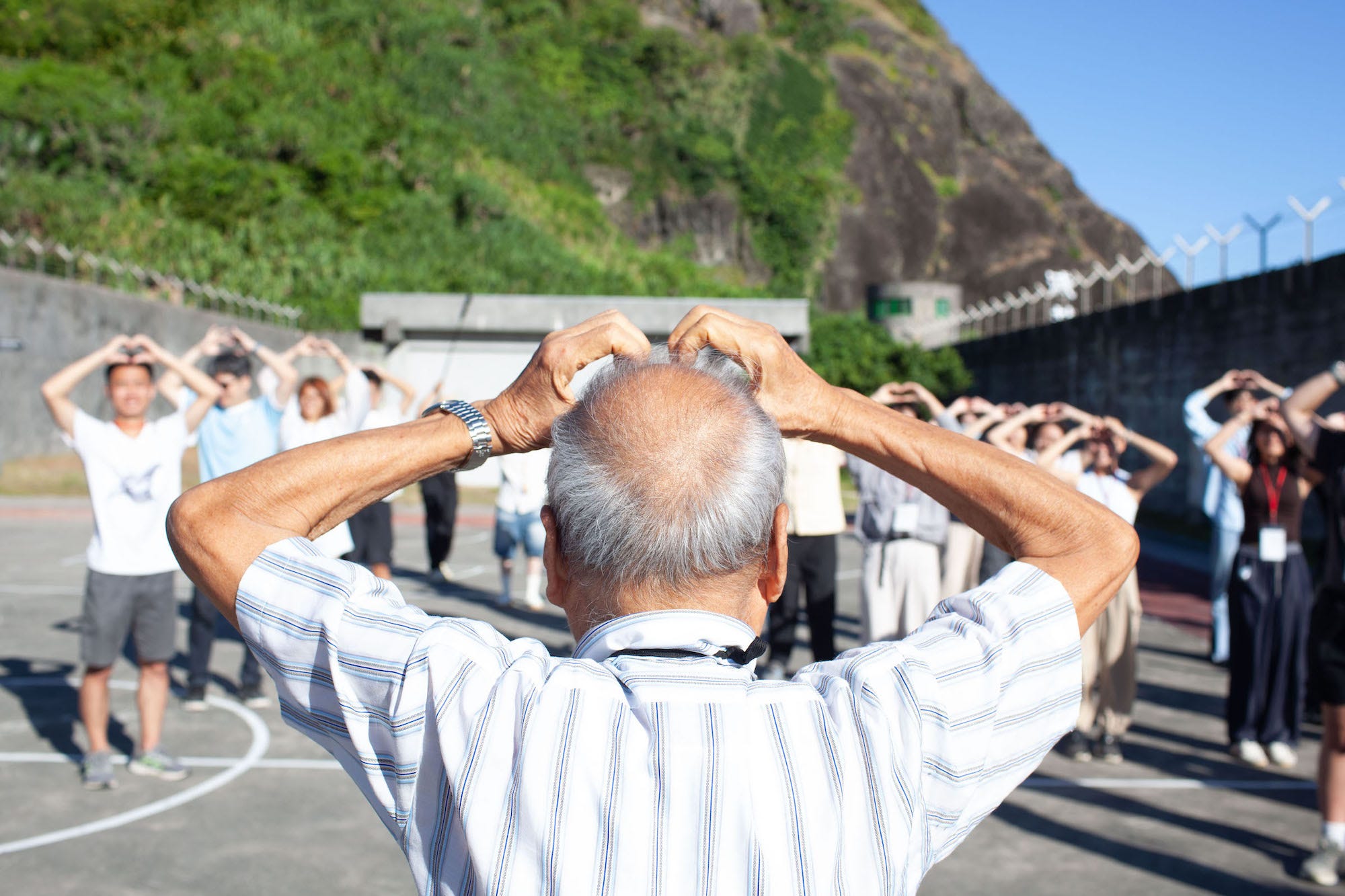
Somewhere along the way, Elder Ze Zhou decided he too wanted to contribute a hand pose of his own, and began making a heart atop his head during group photos. It slowly caught on. One night, after the vigil, as photographers asked everyone to raise their electric candles to their chest, he balanced his on his head and curled his hands into a heart around it.
Naturally, everyone followed.
By the end of camp, Elder Ze Zhou’s heart had become the final gesture in every group photo. After four days spent revisiting the hardest years of his life, this, somehow, was the gesture he wanted to leave us with.
On the rocky ferry back from Green Island, as I sucked on dried plums to hold off my nausea, Long San told me about a conversation he’d had with Elder Ze Zhou.
After 16 years of organizing these camps, he realized there was one question he’d never asked.
After everything you have endured on these islands, if you had the choice, would you choose to be reborn in Taiwan?
“Yes.”
Elder Ze Zhou smiled.
“I would.”
He paused.
“Because I would want to see how Taiwan has gotten better.”
My deepest gratitude to the Chen Wen-Chen Memorial Foundation for letting me tag along on this camp, and to all the elders, teachers, and young people who so generously opened your hearts and entrusted me with your stories. This time together meant the world to me, and I’m still carrying and processing so much of what you shared.
Massive respect to photographers 蘇悅 Su Yue and 廖行寬 Aaron Liau for capturing these days with such poetry, and to the Camp and the Chen Wen-Chen Foundation for letting me share them here. Special thanks to 李紫彤 Lee Tzu-Tung, who gave so generously of her time and energy to carefully review the Chinese version.
If any part of this resonated with you—or brought up questions—I’d love to hear about it, in the comments below or by email. I’m working these reflections into a larger body of work, and your thoughts would be genuinely useful. And, as always, I’d be grateful if you shared this piece with others who might be interested.
A(nother) absolutely gorgeous reflection that brought me to tears! Thank you for this gift 💝
Learning so much -- what a thoughtful essay to highlight care and intergenerational practices of passing on individual and collective memory.